



Death of a Sales Page
A Juxtaposition
I recently finished writing the longest essay The Orthodox Snake has ever published: a dense, 9,236-word, 50-page story of two ancient empires' 60-year turf war over Christ’s birthplace. It’s a prequel to the story of the Magi in Matthew’s Gospel. I'll be publishing it later in 2026, during the Christmas season.
My beta-readers had one primary critique: “It’s too long. No way anyone on the internet is gonna read it all.”
A few days later, a leading association for marketers and copywriters sent me the sales page for their new mini-course. The sales copy was personally written by the CEO of the copywriter’s association.
Wanting to see what the experts were creating, I started scrolling through the sales page. And I kept scrolling for about a minute straight. My jaw progressively dropped, awestruck.
I exported the sales page as a PDF and checked its stats.
It’s 10,024 words long; 59 double-spaced pages.
There’s nothing complicated about the mini-course being sold, or its purpose. I can sum it up in a couple lines:
Respected copywriter will teach you how to sell your own copywriting services to big corporations for a premium fee.
The sales page claimed tuition for this course should cost every student $20,000. But, of course, that price tag gets miraculously slashed to only $249 in the space of three pages.
Excuse the obvious observation, but a history essay and a sales page are not the same. They’re just barely in the same dimension, only because they’re both trying to persuade you with written words. They have two points of overlap, then shoot off in different directions, never to intersect again.
So in what world should a sales page be longer than a historical narrative covering 60 years?
One of these pieces is usually found in the kind of books you read for your college final papers. The other is usually found in the morning emails you glance over before your shift starts.
If my essay is way too long, then what could possibly justify a sales page that’s even longer? How has contemporary ad copywriting gone so wrong that sales pages are now more verbose than the literal scholastics?
I think this sales page illustrates three trends in digital ad writing (which I’ll also just call copywriting). Each of these trends started as a marketing gimmick, got standardized into a method, and that method has now led to generic sales pages that speak in sentence fragments, weaponize doomscrolling, and distort the latest research to manipulate their audience.
Together, these trends are the death of a sales page, and the death of communication in general.
The Orthodox Snake exists to counter all three of these trends, so we’ll name them in relation to our ideals as a writing agency:
Attack on Craft: Sentence Fragments.
Attack on Impact: Weaponized Doomscrolling
Attack on Truth: Use this “One Secret Trick” to manipulate your audience with Science
This is one of our longer essays. As you’ll notice, I criticize using length as a weapon to take the reader’s attention hostage. Length itself isn’t the crime—wasting time is. Judge for yourself whether I waste words. If I waste your time, you should close the tab. But if I don’t, we should talk.
Also, with all the talk about "attack on" I couldn't help but think of Attack on Titan. Attack on Titan is going to be the visual theme for the rest of the essay.
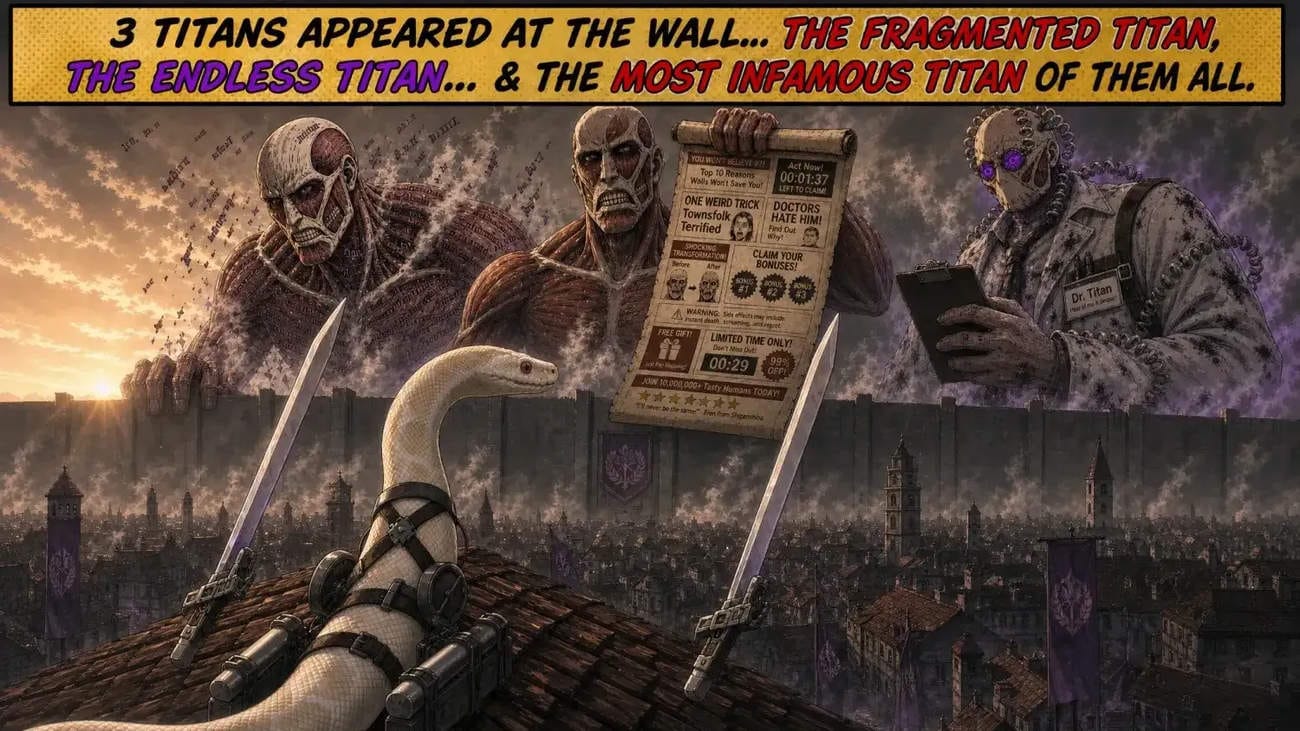
Attack on Craft: Sentence Fragments.
You’ve doubtless seen this everywhere.
Writing like this.
Single-sentence paragraphs.
Too much white space.
So you feel the need to keep looking
Just to get to the end of the writer’s thought.
But the joke’s on you,
Because the thought never goes anywhere.
It’s like a haiku…
For people who don’t respect the art of communication.
Sentence fragments are considered best practice in the copywriting world. The arguments I’ve heard in favor of them are:
People nowadays have shorter attention spans than goldfish. You have to dangle some visual elements in front of them just to keep them engaged.
Sentence fragments sound casual. Dating apps and the endless flood of cheap Amazon knock-offs have made people non-committal, so they like casual.
People nowadays just speak in sentence fragments. You don’t want to pitch your product with language no one understands.
I’ll respond to each of these, but I want to start by pointing out the cynical and passive attitude behind them: People don’t really care anymore, they can barely complete their own sentences—their brains barely activate at all—so you gotta sell to their dumb, stupid lizard brains.
But let’s think this assumption through to its conclusions. If humanity is so far gone that this much cynicism is justified, then that means:
“Sales” is just the industry of manipulating your customers. Communication in general is just manipulation.
You need to stop copywriting and start building a bunker off the grid, because the same lizard-brained zombies you’re selling to are also responsible for all the utilities and infrastructure keeping you alive every day. If you can’t trust them to read a full sentence, you can’t trust them to keep the electricity running and the water clean.
If you scoff at either of those statements because they don’t match reality, then you’re seeing the problem with the cynicism that guides much of modern copywriting. The same cynicism drives marketing in general, since copywriting is downstream from the greater marketing industry.
Let’s also consider how passive this attitude is. The copywriter’s passive acceptance of the reader’s near-lack of object permanence is more of a hedge against failure than a consistent attitude.
If writers were 100% passive, they could only react to readers as they are. Writers would be powerless to expect any growth or change from readers, so writing itself would be futile. If that’s true, then we might as well stop communicating in general; we can’t change anyone’s mind, nor can we get them to learn anything. So what’s the point?
Of course, nobody thinks this is true, because we keep writing checks and burning AI tokens to publish new sales pages. So we all secretly expect to make some change in the reader.
Whether we want to acknowledge it or not, writing still affects the average reader.
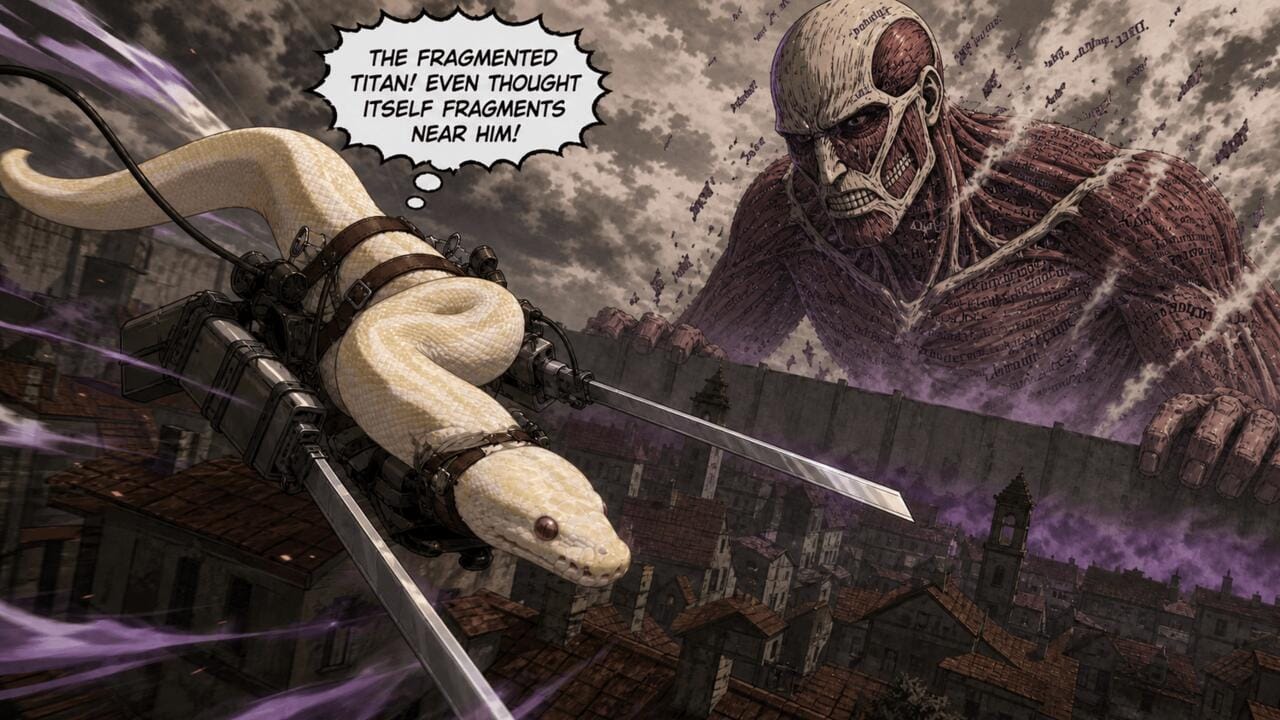
About Short Attention Spans
I don’t doubt that attention spans are low on the internet, especially social media. But that doesn’t mean the only way to find an audience is to act as if the average person now lacks object permanence.
Attention is just a mental habit. It’s a habit that exists to point us towards good things and keep us away from bad things.
Habits emerge from our nature; a habit is a flower, our nature is the root it grows from. And it turns out that human nature loves good things and hates bad things.
Since attention is a habit, it can get stronger or weaker. It can be fed, starved, and conditioned. But no matter what happens to the habit, people will always naturally want what they believe is good and avoid what they perceive as bad.
Activate that natural desire for good, or that natural aversion towards the bad, and it will cause attention to grow.
If you truly want something, do you forget about it after scrolling to the next reel? After replying to a single text? No. Our desire grabs our attention and hangs on to it, for days, weeks, maybe years. We start planning and budgeting for it.
The same thing happens if we’re truly concerned about something bad happening; we ruminate on it, worry about it at night, and plan strategies to avoid it.
People only lose object permanence when we don’t care at all. Nobody remembers background noise, because it never deserved attention—not good, not even bad, just meh, whatever.
The solution isn’t to try hyping up a worthless product, or ironically ragebaiting someone into looking at it. In both cases, the viewer’s attention span drops to zero not because the internet has rewritten human nature, but because the product is garbage, people can smell garbage from a mile away, and it receives the same amount of attention we give to all garbage—none.
If you flood a space full of garbage and background noise, then it indeed becomes a place where people stop paying attention by default. The digital environment conditions us to ignore everything, and our attention starves as we adapt.
Instead of selling more garbage, we could, you know, introduce people to things that aren’t garbage.
The real solution is to sell a product that’s legitimately good, or legitimately good at solving a real problem. If you have a product like that, the copywriting doesn’t have to rely on gimmicks.
The copywriting can simply introduce the product, and readers will naturally respond to the good it’s accomplishing, or the problem it’s fixing. And this is our copywriting philosophy at The Orthodox Snake.
Sentence Fragments Aren’t Just Casual, They’re Rude
Let’s move on to the second argument: sentence fragments are casual, and people like casual (they don’t love casual though, that’s too committal.)
First, there’s a reason why sentence fragments are bad: they’re incomplete thoughts. You literally are not finishing a thought. Writing is just the record of thinking, and the whole point of writing and thinking is to have complete thoughts.
A complete thought is easier for your reader to interpret because they don’t have to complete the thought for you.
By completing your thoughts and writing complete sentences, you’re sending a message that you value the reader and their effort. You did the work of thinking through your own thoughts, instead of dumping the work onto them—unsolicited—and letting them figure it out.
Completing your thoughts and sentences is an act of hospitality towards your reader. You’re being kind to them even while they’re simply window shopping outside your storefront. You’re being inviting without being pushy, and all it takes is finishing your sentences.
Do sentence fragments sound casual? Sure, but they come at the cost of being subtly rude. A bunch of sentence fragments is a gesture to your reader that tells them, “Yea whatever, I can’t be bothered to finish this sales pitch. You do it for me. And once you’re done with that, buy my product. Thnx, idiot.”
Further, a sales pitch is one of the worst situations to be casual. You built the product, you came to us with an offer, now you’re hinting that you don’t really care? You’re giving readers reason to be suspicious when you need them to trust you.
You can’t complete the thoughts in your sales pitch?
Are you stupid?
Do you not care about your product?
Or do you not care about your potential customers?
The reader will have to make assumptions about you to answer these questions, and none of those options inspire trust.
Sentence Fragments Aren’t Easy, Either.
Given what we’ve already said about complete thoughts, it’s disingenuous to claim that “sentence fragments help people understand you.”
The defining feature of a sentence fragment is that it’s harder to understand—the reader has to supply the noun, or the verb, or an entire clause, or the tone, or almost an entire sentence. They have to do your work for you, and every word they have to spot you is another opportunity for misunderstanding.
But sure, people use sentence fragments—sometimes. People also frequently misunderstand, have conversations that go nowhere, and feel insulted over misunderstandings.
You don’t want any of that to happen as you’re trying to make a sale, do you?
Again, you aren’t totally passive as a writer. We’re engaging in communication, and that’s a group effort. The copywriter can, and should, give some effort and expect some effort in reply. Effort starts in the very structure of the sentences you craft.
The Orthodox Snake copywriting philosophy is to care about the craft, down to the line-by-line sentence level. And that’s what our writing agency does all day, for our own essays and projects for our clientele.
Attack on Impact: Weaponized Doomscrolling
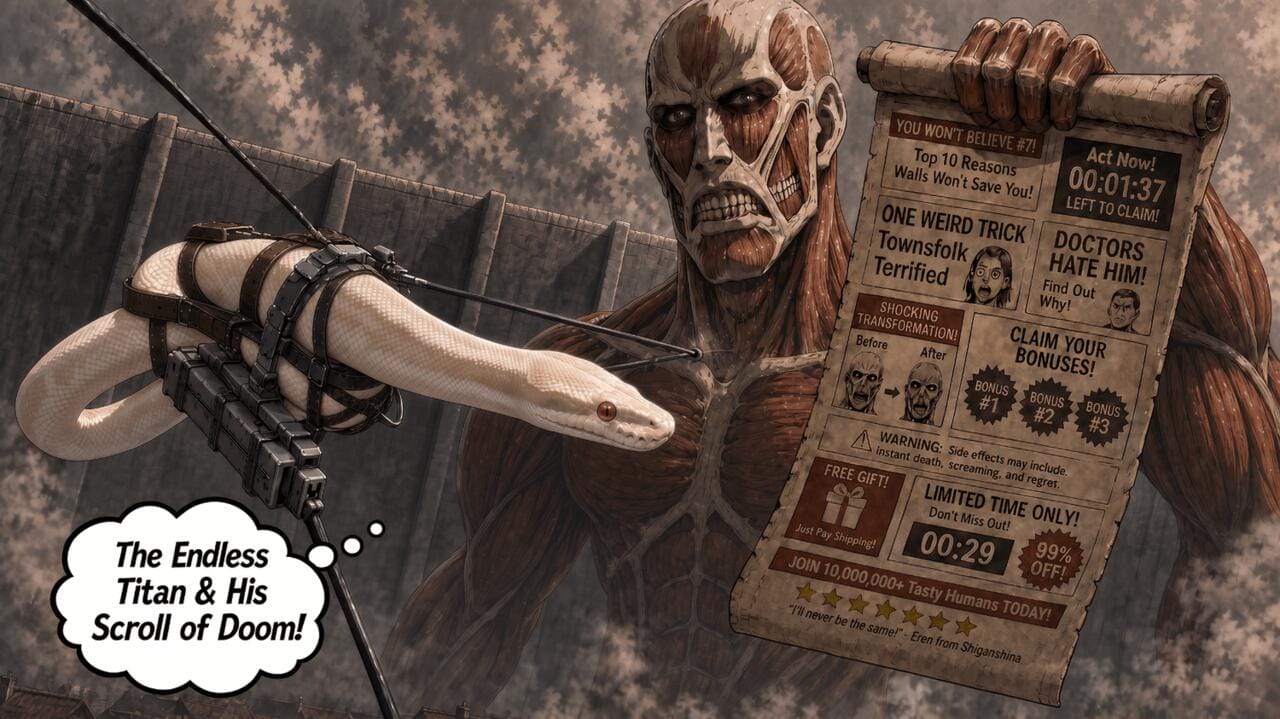
Another best practice amongst copywriters is to absolutely jam-pack the sales page: product copy, client testimonials, the owner’s life story reinterpreted as a hero’s journey (I wish I was joking), the science behind the product that’ll change your life, the transformation you’ll see once you buy the product, an FAQ section, a few 10-minute video clips (“stay with me til the end for a special, secret offer"). There’s that fake 15-minute timer that ticks down by the second (and if you tried to really read the whole page, you’d run out of time), and those fake pings that read like “Dick B. from Possum Trot, KY, just bought 2x of our deluxe package!”
Copywriters are encouraged to take the endless-scrolling experience from TikTok & Facebook/Instagram Reels, but focus everything on a single product. Keep spraying the viewer with a firehose of information, but now they’re only getting drenched in information about a single product.
As we stated earlier, the purpose of communication is conveying truth. We could even add beauty. But like sentence fragments, a sales page that demands doomscrolling sacrifices truth and beauty for the sake of manipulating the reader.
The best practice in copywriting is to pack the sales page with so many sentence fragments that the page requires doomscrolling. Sentence fragments and doomscrolling encourage the reader to behave in opposite ways, so put together, these practices create ads that contradict themselves down to their very structure.
Sentence fragments end before they have a point. Doomscroll sales pages refuse to end, and when they do, it turns out they never had a point, either. If we zoom in to the individual sentences, they’re too short to say anything. But if we zoom out to the sales page as a whole, it’s too long to say anything.
Perhaps it’s too harsh to say there’s absolutely no content amongst the endless scroll. It’s most accurate to say it’s hype, artificial urgency, and justifying arbitrary prices. Still, the point stands.
Again, if the point is to manipulate the reader, then the length of the pitch can itself be a means of manipulation. And too often, the strategy is to make the pitch so long that the reader feels a sunk-cost bias: “I’ve spent 15 minutes reading about how this 10-video course is going to change my life. I’ve already invested time that I’m not getting back, so it’s gotta be worth it, right?”
But this strategy turns the sale into a hostage situation, not an invitation to help the reader. And if a reader’s first introduction to your product—which claims to make their life better—begins with you taking their time and attention hostage, then why should they assume you’ll treat them better later? Because they’ll pay a fee for your real wisdom?
That strategy sounds more like a ransom. And most people know not to negotiate with terrorists.
If your sales page can only make sales by holding your customers’ time and attention hostage through doomscrolling, you’re waving a red flag telling them you aren’t trustworthy. A good product doesn’t need to take hostages to sell itself.
In the same way that writing complete thoughts is good hospitality in the marketplace, so it is with the length of your pitch. You can say nothing for 30 minutes, or you can say something meaningful in 30 seconds. Which do you think a customer will appreciate more?
We aren’t saying your sales page needs to be bare. Testimonials, video introductions, FAQs, even the story about why the creator cares so much about their product—these can all be worthwhile elements of a good sales page. But the Orthodox Snake copywriting philosophy is that every element should signal hospitality and honesty to your audience.
Your customers should not feel like they’re trying to escape a hostage situation. You should be making a positive impact on your readers from the first impression. The Orthodox Snake always makes sure our work—whether it be an essay or a client’s project—is hospitable towards the reader.
Attack on Truth: Doctors HATE Copywriters for this One Secret Trick!
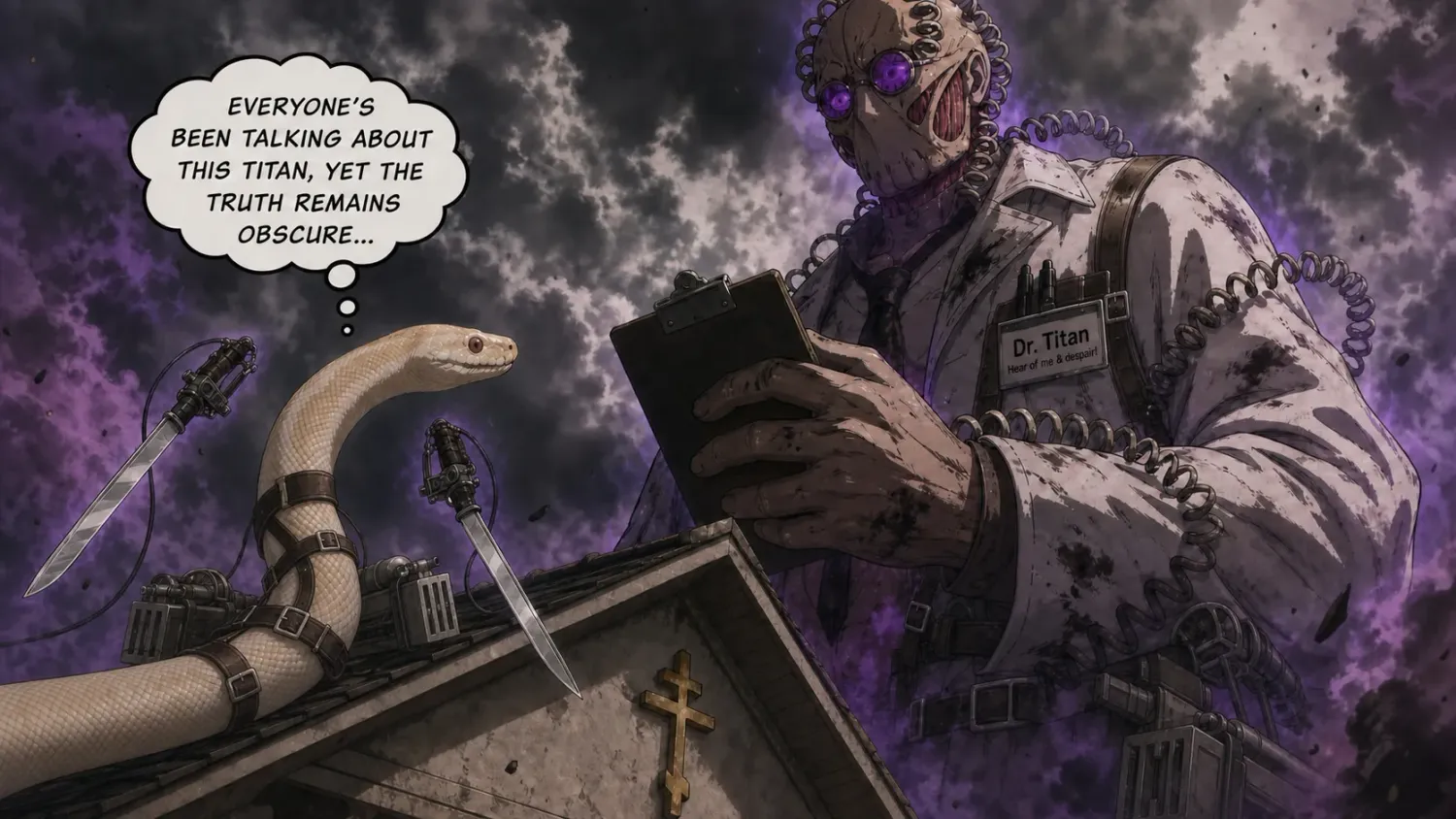
We now arrive at what I consider the most egregious trick in the best practices of copywriting: peddling misinformation to hype up a product. The misinformation is almost always from science, usually a “soft science” like psychology or sociology.
Lately I’ve seen “neuro-coupling” (read: empathy) as a life hack that online courses claim to teach you. Any concept from “dark psychology” also sells, as proven by pick-up artist courses.
Science is the main target because marketers want the authority of scientists. Copywriters often reach for the “soft sciences” in particular because these fields have much less consensus than, say, chemistry or physics. All the conflicting theories and data in the soft sciences give the marketing team plausible deniability if the product doesn’t actually fulfill all the hype in the sales copy.
I have no doubt that copywriters would ape the hard sciences, specifically medicine, if they were allowed. Thankfully, any health claims on any website making sales in America are subject to the Food & Drug Administration.
How do I know this? Because “don’t make any health claims in your ads, or else you’re liable to get sued by the FDA” is one of the main lessons my copywriting association drills into the heads of trainees.
Even the Joker won’t take on the IRS. Likewise, even copywriters for alternative health supplements fear the FDA.
There’s no government enforcement for fields like psychology and sociology, though, not even for behavioral neuroscience or evolutionary biology, so copywriters can read up on these fields and turn them into sales copy. Which brings us to the roots of the problem with this assault on truth.
The first problem: no copywriter is reading a science manuscript, scholarly article, or primary text. There’s a 99.9% chance a copywriter is reading a tertiary source (a newspaper article, a blog post, the Wikipedia article, the Google AI summary, a YouTube video) about some theory, concept, or study, rather than the primary source from any of the scholars who actually discovered the thing.
The second problem: a copywriter trying to sell a pitch is never a good-faith reader of whatever theory or experiment they’re researching. They’re reading so they can make sales, not so they can share some fascinating new truth to anyone willing to listen. The copywriter is only looking for excerpts that will reinforce their sales pitch, nothing else.
So an attack on truth starts like this: some science is interpreted by a reporter, then re-interpreted by a copywriter. The result is not science.
Rather, the result is a sales pitch based on a game of telephone that started with technical jargon. The pitch and the hype can quickly spiral into misinformation, then millions of people start treating a round of the telephone game as established science.
This attack on truth by modern copywriting is especially annoying to us at The Orthodox Snake because Dr. Boaz wrote his 330 page PhD dissertation debunking science hype from the 1980s that people still just assume is true.
You probably heard that “neuroscience proved we don’t have free will.” Neuroscience has actually done no such thing, but one researcher in 1983 (the famous “Libet Study”) wanted to hype up some unreplicated data from his study of 5 subjects, so he claimed—repeatedly, to anyone that would listen—that he knew what a “free will” signal looks like in our brain, and that we don’t have it.
We’ll save you the long story here. If you’re interested, just email us and Dr. Boaz will send you a copy for free. Click here for the ProQuest database preview of it.
The point is: scientific claims have a long history of becoming disinformation, and nobody should be encouraging that. Yet, a best practice in modern copywriting is to grab whatever scientific claims you can without getting sued, and stuff them into your sales pitch, truth of the matter be damned.
But if you have to sacrifice truth for sales, what does that say about you and your business? You’re waving yet another subtle red flag that customers shouldn’t trust you, right when you’re trying to prove that you are trustworthy. You’re contradicting yourself in the act.
You’re again showing contempt for your customers when you could show them hospitality.
Why lie with hype when you could just give prospective customers the truth? As we said earlier, people have a natural drive towards the good and away from the bad. Since both of those drives depend on knowing how things truly are, people also have a natural drive towards the truth, so they can make the correct decisions.
The Orthodox Snake copywriting philosophy believes that good marketing starts with a good product. Your marketing shouldn’t need to pillage science in order to sell your product.
Finding Solutions, Writing Conclusions
We’ve laid out the problems behind the best practices of modern copywriting, and proposed solutions. To recap, The Orthodox Snake copywriting philosophy is:
Craft, not fragmentation: we believe good copywriting respects the reader by respecting the craft of writing. Full sentences and complete thoughts are acts of hospitality towards the customer.
Impact, not a hostage negotiation: we believe that good copywriting makes an impact by being succinct. A sale shouldn’t start by taking the customer’s time hostage.
Truth, not pseudoscience: we believe good copywriting can make a sale without turning science into misinformation. A good product stands on its own, without need of false hype or misused jargon. Telling the truth about a product and the problems it solves is always the best practice.

Our philosophy revolves around hospitality and honesty.
If you run a business built on a mission, honest work, and values you live by, you’ve probably felt a disconnect between your business and modern copywriting. The “best practices” of the standard sales page feel wrong—too gimmicky, lacking substance, slimy.
Standard sales copy simply doesn’t do justice to your business. Since you can't find marketing that aligns with your work, you lose business. Or worse, you compromise with marketing that doesn’t match, and you attract the wrong clientele.
But you don’t have to choose between “no marketing” or “sleazy marketing”.
If our copywriting philosophy resonates with you, reach out to The Orthodox Snake. We partner with thoughtful, high-quality business owners to create copy that matches their mission.
Through serving our business clients, we want to rewrite the copywriting industry, so the internet will have fewer broken sentences, less doomscrolling, and less misinforming hype.
You can have a website, ads, and sales pages that tell the truth about your work without feeling scammy. You can have copywriting that filters out junk while drawing in the clients you dream of serving.
If you’re ready for your digital marketing to finally match your mission, book a call with Dr. Boaz. Click one of the buttons below to start our onboarding process.
☦️❤️🐍
Comments are welcome. I read everything, but my charism is writing, not debate. So I respond selectively, only when conversation clearly serves truth and charity. If you don't receive a response, please don't take it personally. Time and energy are precious resources, and I steward them toward the essays themselves.
All comments go through moderation.
If you'd like to engage more substantively, consider writing your own response essay and contacting us through email or social media. I'd be honored to read it and potentially feature it as a guest essay.
☦️❤️🐍
~ Dr. Boaz
The Serpentine Byzantines

Joint Dr. Boaz, the Human

Sweet Potato, the Ball Python
We're a small team comprising a human and a snake.
Joint Dr. Boaz has a Joint PhD in Healthcare Ethics and Theology. He lives a 2nd life as a professional dancer. He's also a parish cantor, visual artist, and gaming streamer.
Sweet Potato is a male albino Ball Python. Born and raised in Florida, he's also traveled across the USA via road trips and even a flight! He's been blessed by a priest and once completed an entire Paschal Fast without eating a single meal.
Let's Connect!
All content © 2020-2026 The Orthodox Snake Writing Agency LLC