




Meet Tiffany the Remote Rescue Intern (Or, the Mercy of a Name)
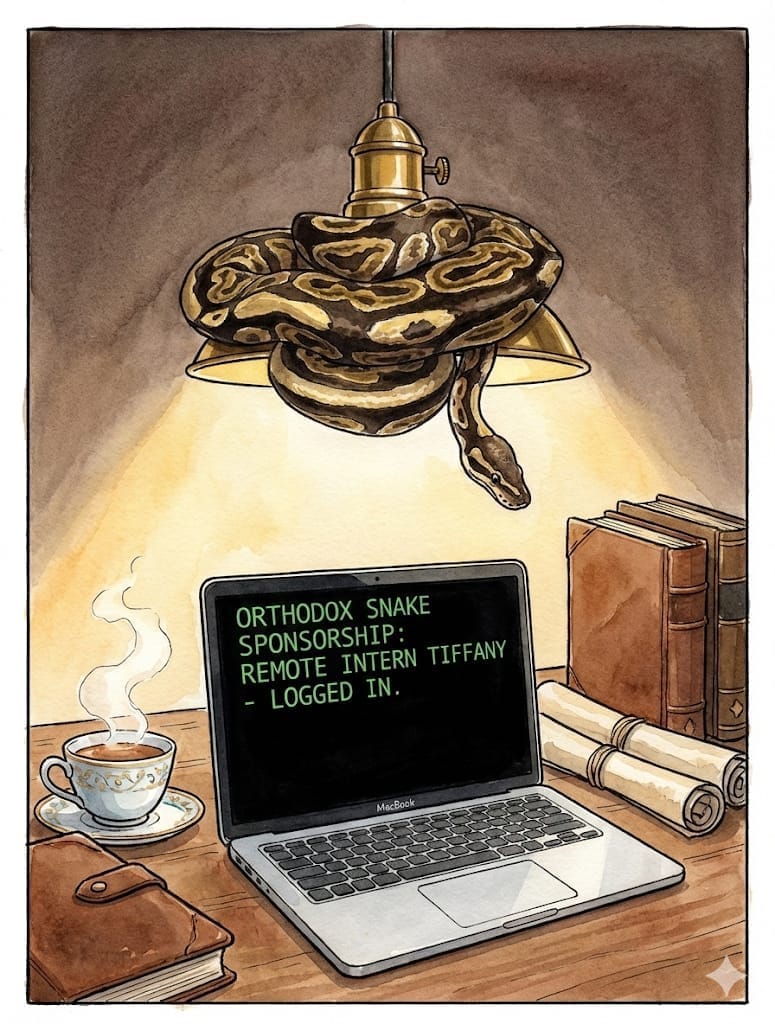
The Orthodox Snake is sponsoring a rescue snake! Her name is Tiffany.
She is a beautiful "Blitz" morph Ball Python with a unique skin pattern. We aren’t adopting her (she isn’t in Florida with Boaz and Sweet Potato). Instead, we are sponsoring her rehabilitation at the incredible Spirit Keeper Animal Sanctuary in Colorado.
The sanctuary is run by an expert team, including animal behaviorist Lori Torrini. As part of our sponsorship, Tiffany has agreed (implicitly) to become our seasonal intern.
Due to her distance from Orthodox Snake HQ, she works remotely. She cannot use a computer, but the workload we give her is pretty light so that isn’t an issue. In fact, the only job we gave her is "get better soon!" and she is excelling at that.
Tiffany is very shy. She is recovering from a very hard life, alongside 66 of her rescued snake roommates.
Yes, they were originally all living under the same roof.
The Rescue
Earlier this year, the Spirit Keepers learned of a severe hoarding situation in Nebraska involving dozens of animals living in squalor. They took the initiative to save these animals and started a joint rescue operation alongside law enforcement.
Rescuers discovered 67 Ball Pythons and one African Grey Parrot living amongst piles of trash and feces. Many had been without access to water for months. They arrived at Spirit Keeper Sanctuary scared, scarred, and starving.
Tragically, one snake passed away shortly after due to refeeding syndrome (when the body can’t handle the metabolic shift out of starvation). Another snake passed due to severe deformities.
The African Grey Parrot was stabilized and immediately transferred to The Gabriel Foundation for adoption.
But Tiffany survived.
She arrived at the sanctuary on April 15th, 2025. During her initial exam, she was given a Body Condition Score of 1 out of 5—the lowest possible score. Her spine and ribs were sharp and prominent under her skin. She was emaciated, dehydrated, and terrified to be alive.
A Recovery Marathon
In her first month, Tiffany struggled. She was so dehydrated she needed a humidity box and warm soaks just to function. At first, all this extra humidity wasn't enough to compensate for what she had weathered. She had a poor first shed at the sanctuary simply because her body needed more recovery time.
Recovery is a process, especially for cold-blooded animals. Recovery from trauma feels agonizingly slow for us humans, even though we burn about 2000 calories a day.
Ball Pythons only burn about 10 calories per day. Recovery is a marathon for them. Human recovery is like a 100-meter sprint in comparison.
But Tiffany has been with the Spirit Keepers for about 8 months now, and she’s recovering her nature. According to her caretaker, Trasi, Tiffany has discovered her two loves: eating and climbing.
She hasn't missed a meal. And when she isn’t eating, she’s waiting in ambush position for her next meal. She enjoys finding the highest ground available, like sky hides and lamp fixtures, then readying herself for an aerial strike.
She has gained 400 grams at the time of writing. Healthy female Ball Pythons usually weigh around 2 kilograms (2000 grams). Her Body Condition Score has also improved to a 3 out of 5.
Tiffany is still extremely shy, especially around people. That’s another reason we made her the remote intern. But we don't care if she’s shy.
We don't love her because she is useful to us; we love her because she exists.

The Mercy of a Name
When the rescuers entered that house in Nebraska, they found dozens of snakes amongst piles of refuse; creatures treated as trash.
Tiffany already had a name, but many of her roommates did not. So the Spirit Keepers gave many of these creatures more than food, shelter, and safety… They gave them names, too.
Don’t get us twisted; we don’t mean to discount the tremendous mercies that food, shelter, and safety are. But it’s worth pointing out the additional mercy—the one that’s easy to miss—the mercy of a name.
Trasi, one of the lead Spirit Keepers, was deeply disturbed that so many were nameless: “I was very bothered that so many had no names. I have major issues when people do not give their animals names,” she told Boaz in an online interview.
So, Trasi gave these unnamed creatures additional attention, an additional gift in itself. Trasi sat quietly with a photograph of each unnamed snake. She waited until the right name came to mind, and then gifted that name to each snake. The Spirit Keepers refused to let these creatures remain objects in a trash pile.
Trasi probably didn’t realize this at the moment, but her urge to gift each creature a name echoes back to the very first task God gave to humanity: to name the animals. In Genesis 2:19-20, God presents all animals to Adam “to see what he would name them.”
Many commentators—even Saints—interpret this event according to some deficiency, along the lines of:
“God only has Adam name the animals so Adam will see he’s missing a helpmate.”
“God only has Adam name the animals because God knows Adam is about to sin. Adam's control over the animals is a demonstration of the power humanity could’ve had if we hadn’t ruined it through sin.”
It is true Adam needed a human helpmate, and humanity has lost its magnificence through sin. But I see this story doing more than simply highlighting what was missing or about to be lost.
I see it hinting at humanity’s ideal relationship to the rest of creation.
God never needed to know the human names for these animals, whether or not sin entered the world. God already knew the being of each creature so intimately that Adam’s names were worthless compared to divine knowledge.
Yet, even when everything was still flawless, He asked Adam to name everything. It is as if the naming was for our sake, or for the sake of those creatures named. If naming did any good at all, it must have been good either for us or for the animals. God already had every possible good in Himself.
We can thus read the scene as God inviting Adam to recognize the goodness of the universe… and add a bit of his own. Adam recognized and reinforced that inherent goodness through giving names, thus adding his own layer of goodness on top of what was already there.
By giving names, Adam was establishing a relationship with each creature. We can tell it was originally a relationship of love and protection, since “they came to Adam as a loving shepherd, passing by him without any fear.” (St. Ephraim the Syrian’s commentary on Genesis 2:20)
Trasi’s intuition to name each of these needy creatures is an echo of how things ought to have always been.
Humanity was always supposed to recognize each creature with the gift of a name.
We were always supposed to be their caregivers.

Giving a creature a good name is its own kind of mercy. Because God is fundamentally relational, all creatures are relational too. (For a deeper explanation of that, see Aquinas' thoughts on the Trinity, or Pope Benedict the XVI's.)
So each creature has more than just a nature; they have a nature and essential relations that sustain them.
Thanks to humanity’s ability to speak and remember, we can give creatures names. And a good name is yet another relation, although not an essential one. A good name tethers a creature to the rest of Creation and its Creator. A good name signifies “this one is loved and cared for, and it reminds me of this other good thing.”
To be named is to be known.
Now, a name is not a magical protective charm. Being given a good name did not shield Tiffany the snake from starvation, nor fear. A name is simply a tether—a sign of a relationship.
And a tether can be either a good or bad thing. It can keep a creature in a safe place, or it can bound them in a dungeon. And for years, Tiffany was in the dungeon.
The Spirit Keepers, however, decided to redeem her name. Like the creature herself, her name was a good thing, abused. In the sanctuary, “Tiffany” no longer signifies an abused animal. “Tiffany” signifies someone cared for.
"Tiffany the snake" now signifies a friend, not trash. And that name is an extra bit of protection against her ever being mistaken for trash again. The name is a great mercy from a simple act of recognition.
Now, Tiffany and her roommates can finally begin revealing the fullness of who they are. Each revealing—in their own way—something unique about the Creator and Creation.
Theology of Animal Rescue
Once you see animal rescue as the act of saving a creature whom God loves, it becomes clear why it's worth putting so much effort into rescuing the so-called "lesser creatures".
Many may wonder what God has to do with animal rescues, or why Christians should care about anything beyond saving human souls. But the saints recognized what many of us forget today: all Creation has its role in the "cosmic chorus" worshipping God.
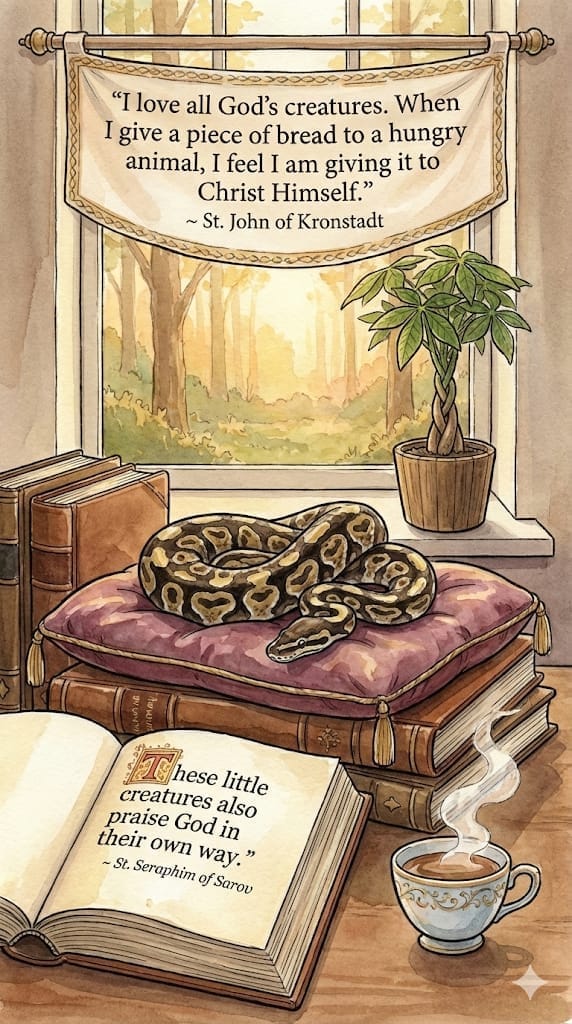
"These little creatures also praise God in their own way." ~ St. Seraphim of Sarov
Whenever we restore a fallen creature back to its rightful place in the chorus, that is a very good thing.
"I love all God's creatures: dogs, cats, birds. When I give a piece of bread to a hungry animal, I feel I am giving it to Christ Himself." ~ St. John of Kronstadt
Tiffany and her 66 roommates lived in hell. And they are not the only snakes we know who have lived through hell. We should not ignore the tragedy. But there is now much more Beauty in the world thanks to the work of Spirit Keeper Animal Sanctuary.
How You Can Help
Tiffany is one of nearly 100 animals at Spirit Keeper Animal Sanctuary who need medical care, food, and time to heal. Some of her roommates will be lifelong residents at the sanctuary.
They survive on generosity. If you'd like to join The Orthodox Snake in supporting them, you can:
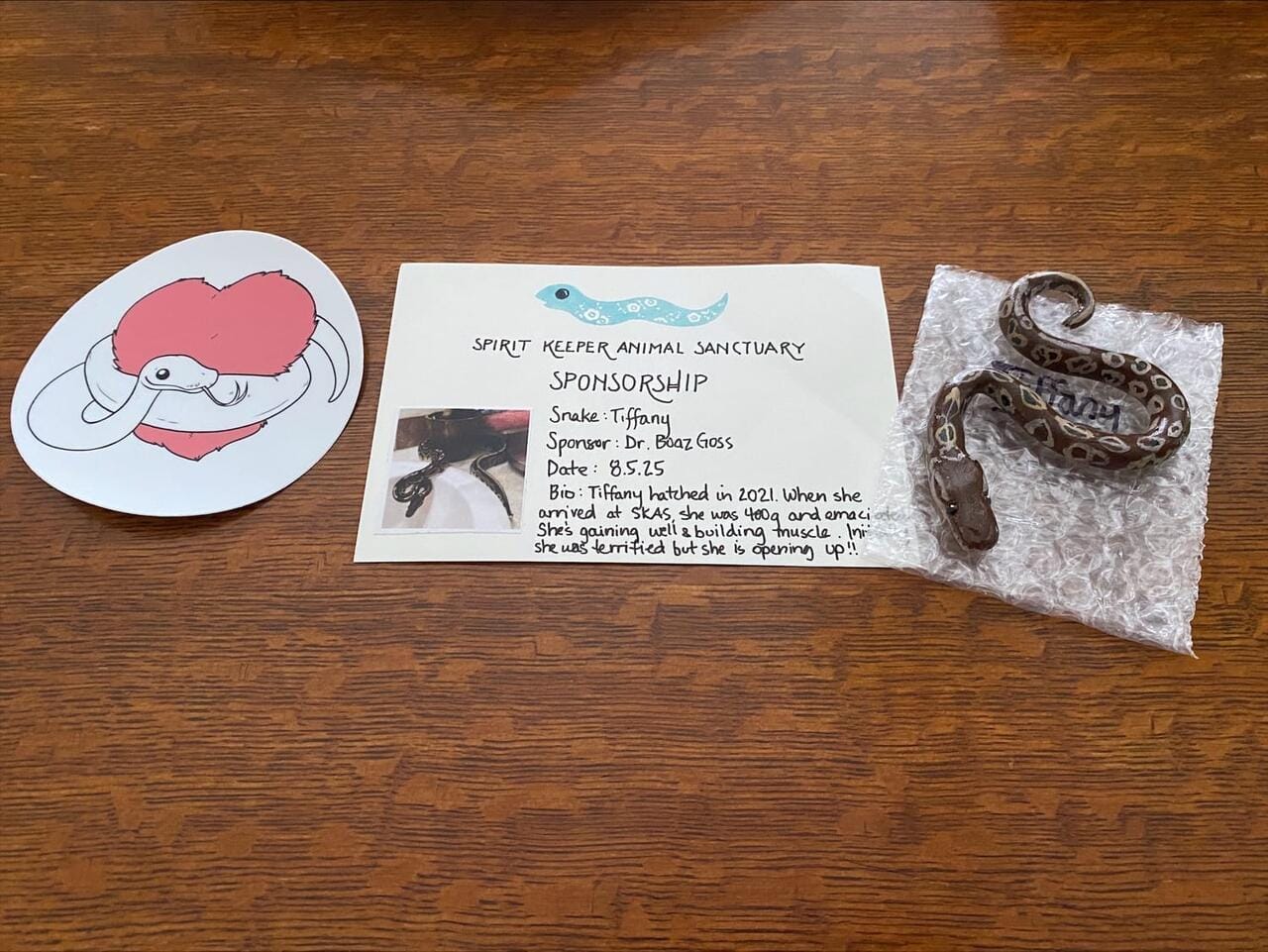
Sponsor a Snake: Many of Tiffany's roommates still need a sponsor. Give a future to one of them! For as little as $10/month, you get a handmade figurine of your sponsored snake and monthly updates. (Here is our figurine of Tiffany!)
Make a One-Time Donation: Spirit Keepers Animal Sanctuary is a verified 501(c)(3) non-profit charity. They have their own page in the PayPal Giving Fund, meaning 100% of your donation goes to them—no fees.
Follow Their Journey: Lori Torrini, one of the lead Spirit Keepers, posts regularly to her YouTube Channel. Many of Tiffany's roommates have made appearances lately, and Lori showcases their progress. She also creates excellent videos on scientifically proven, compassionate animal care.
Tiffany's Photo Album
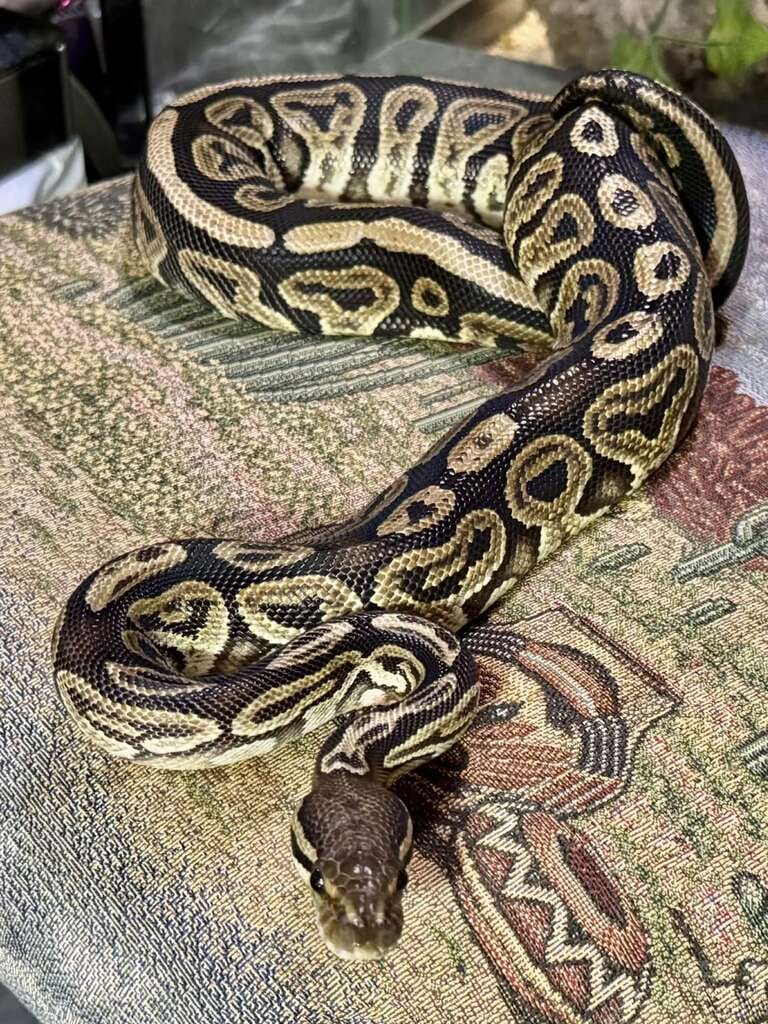
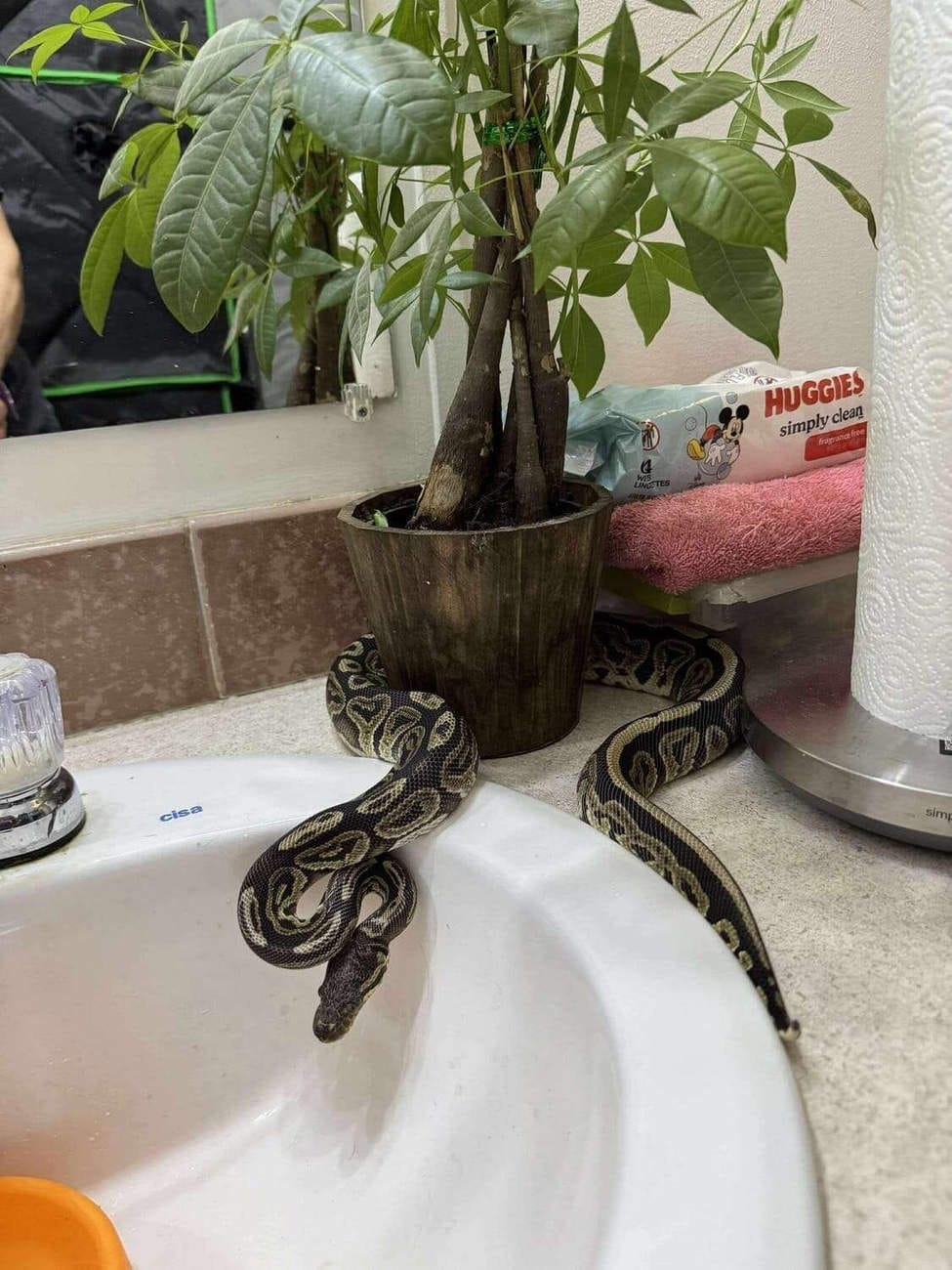
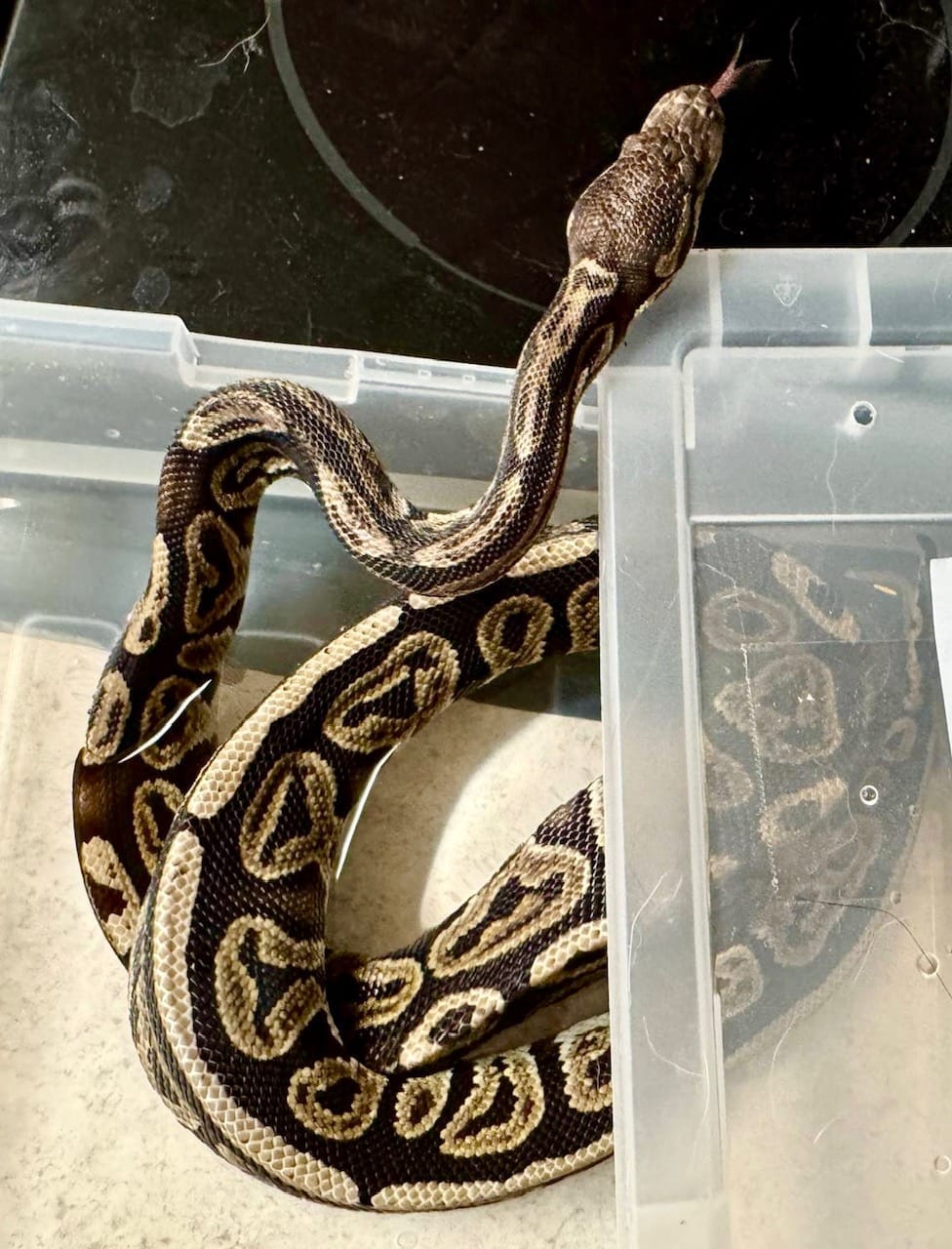
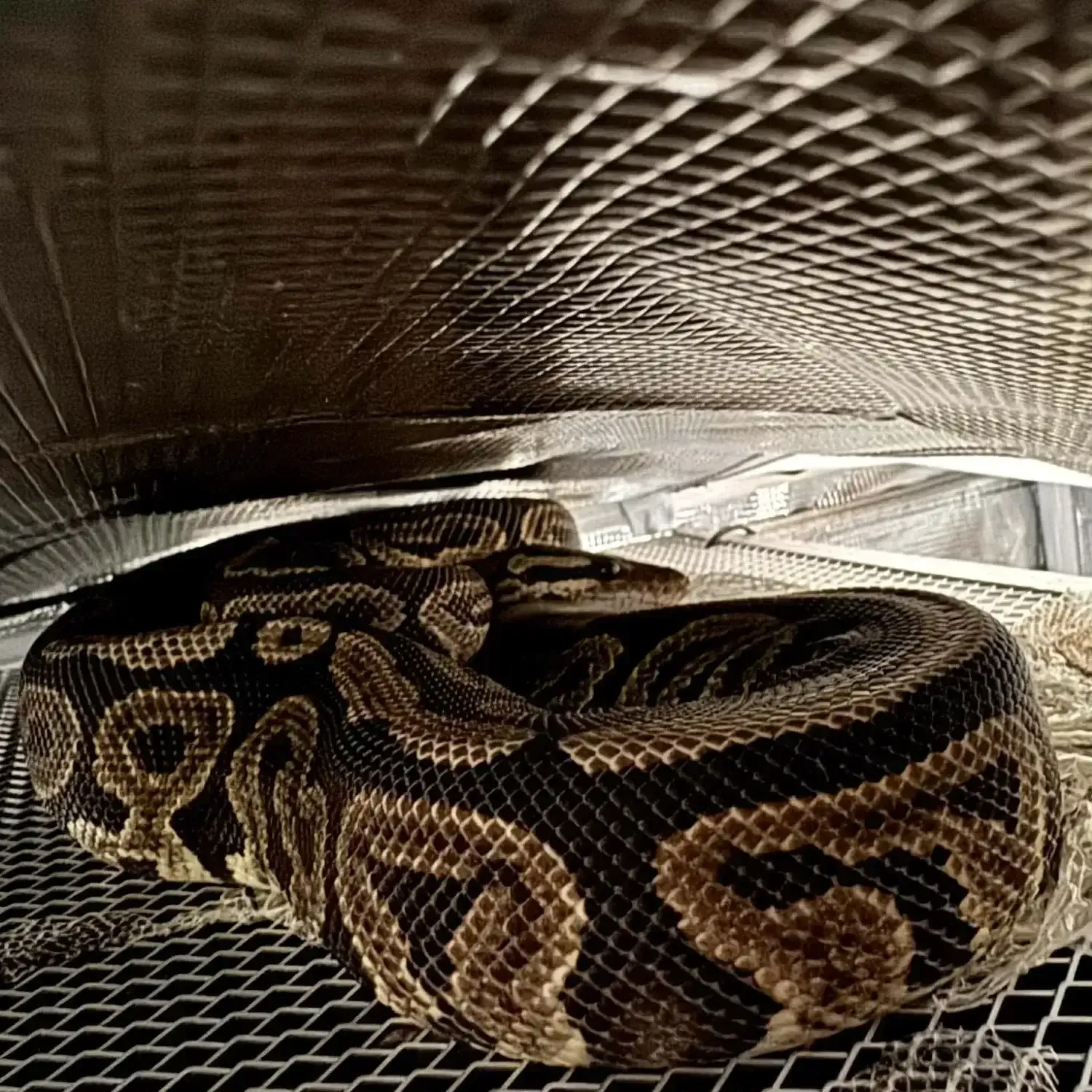
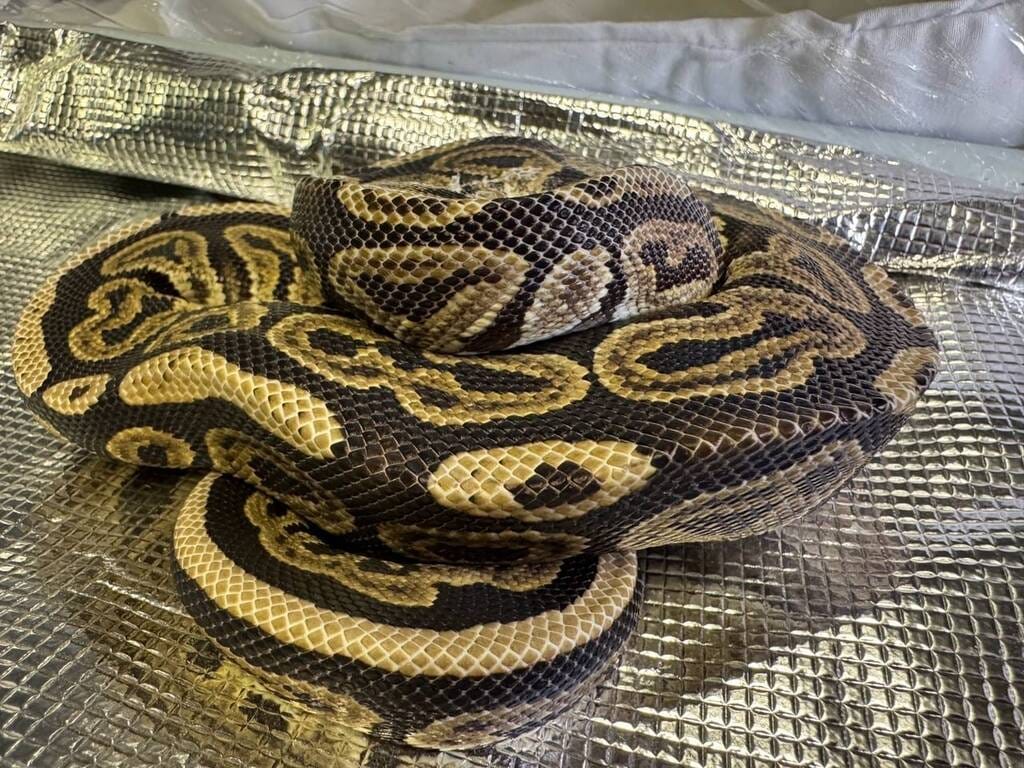
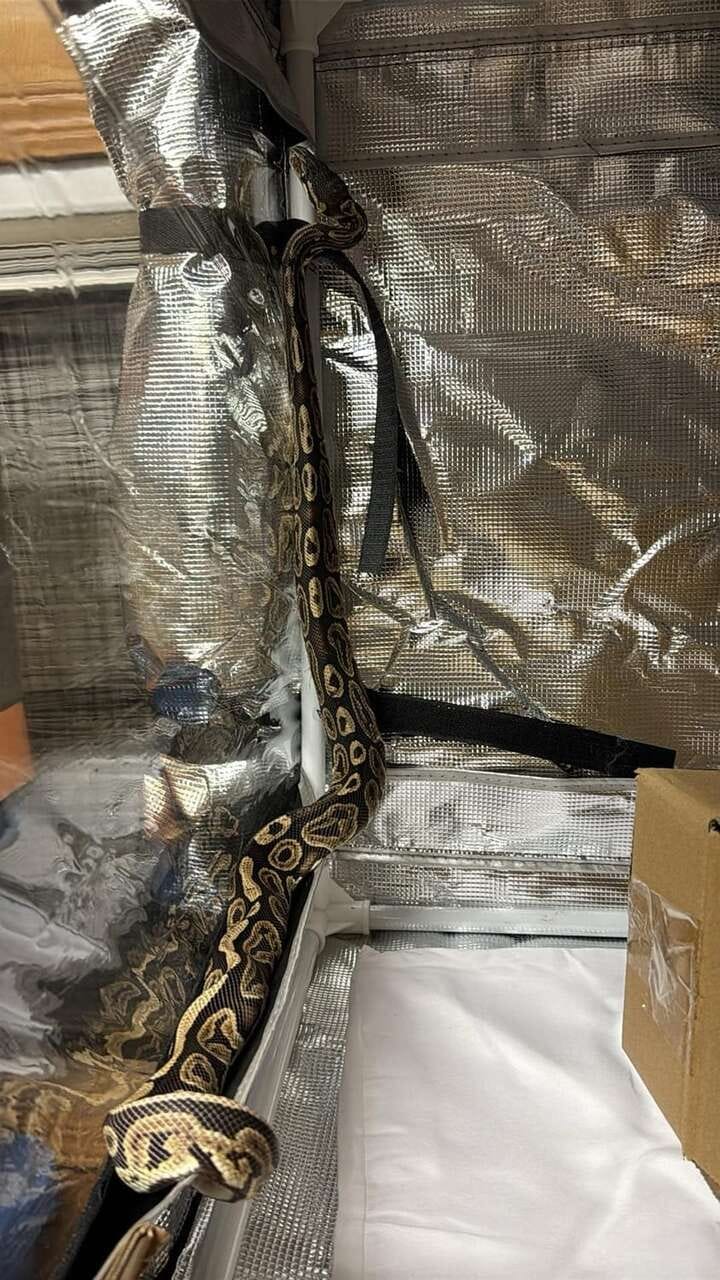
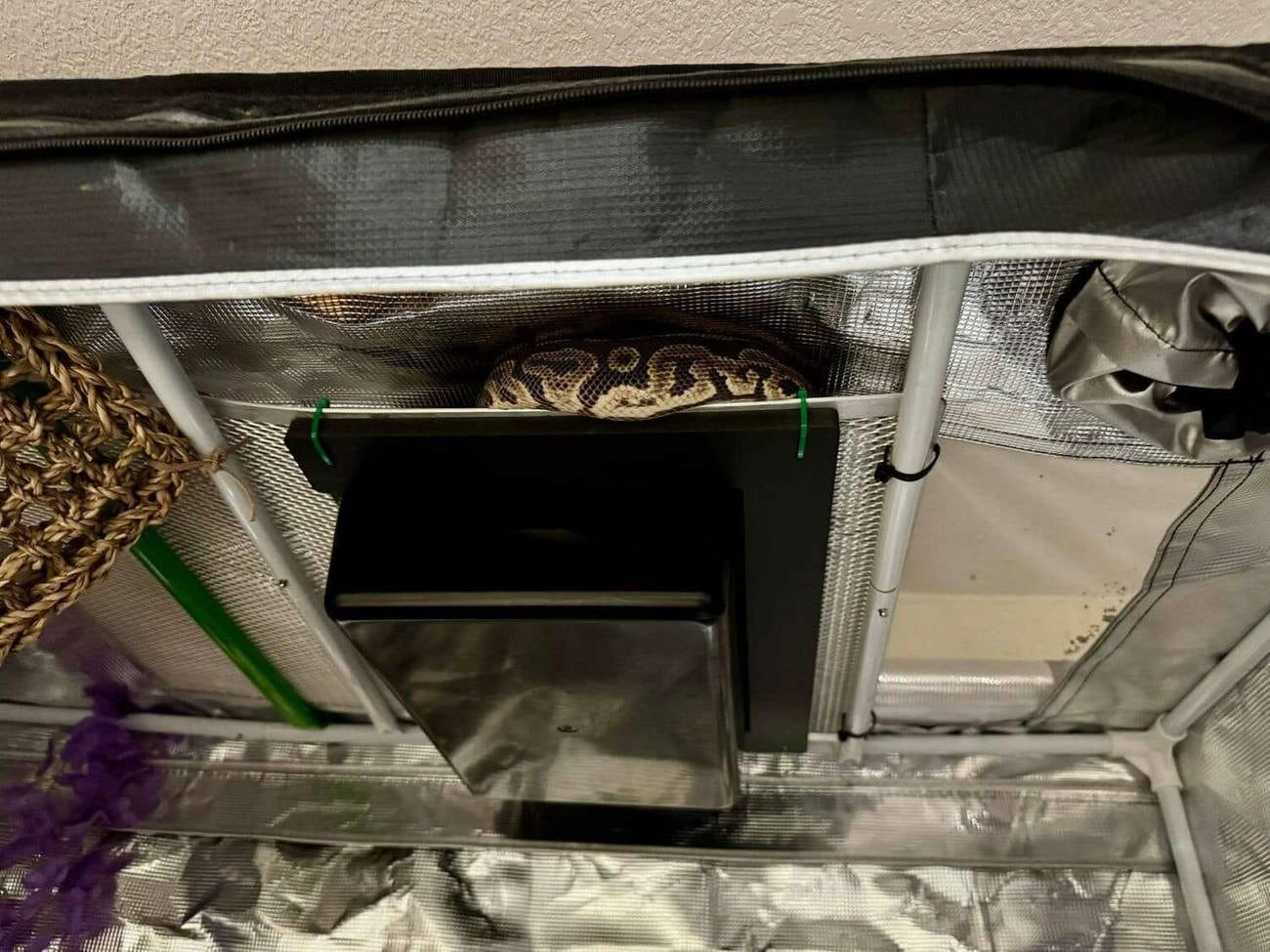
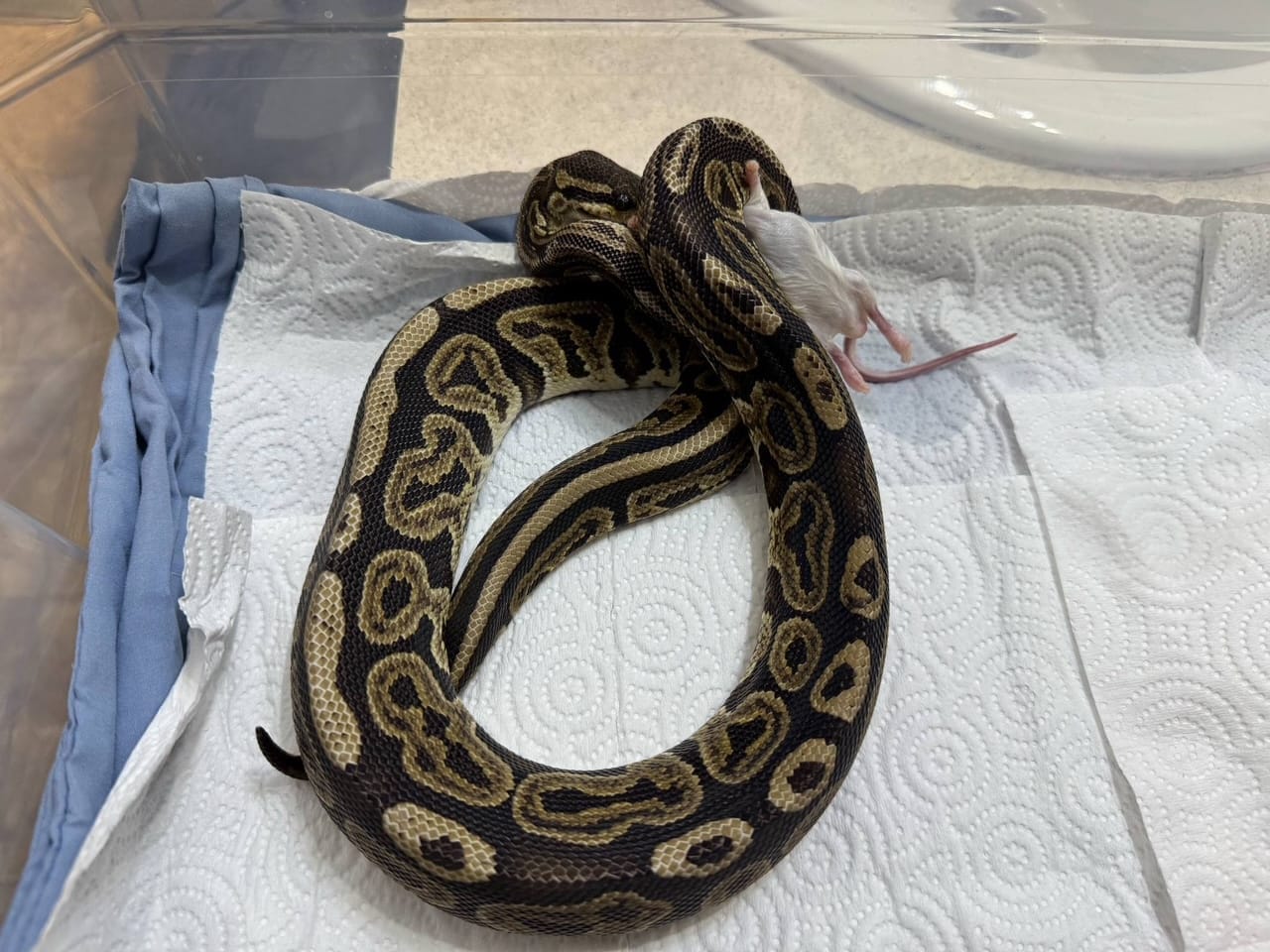
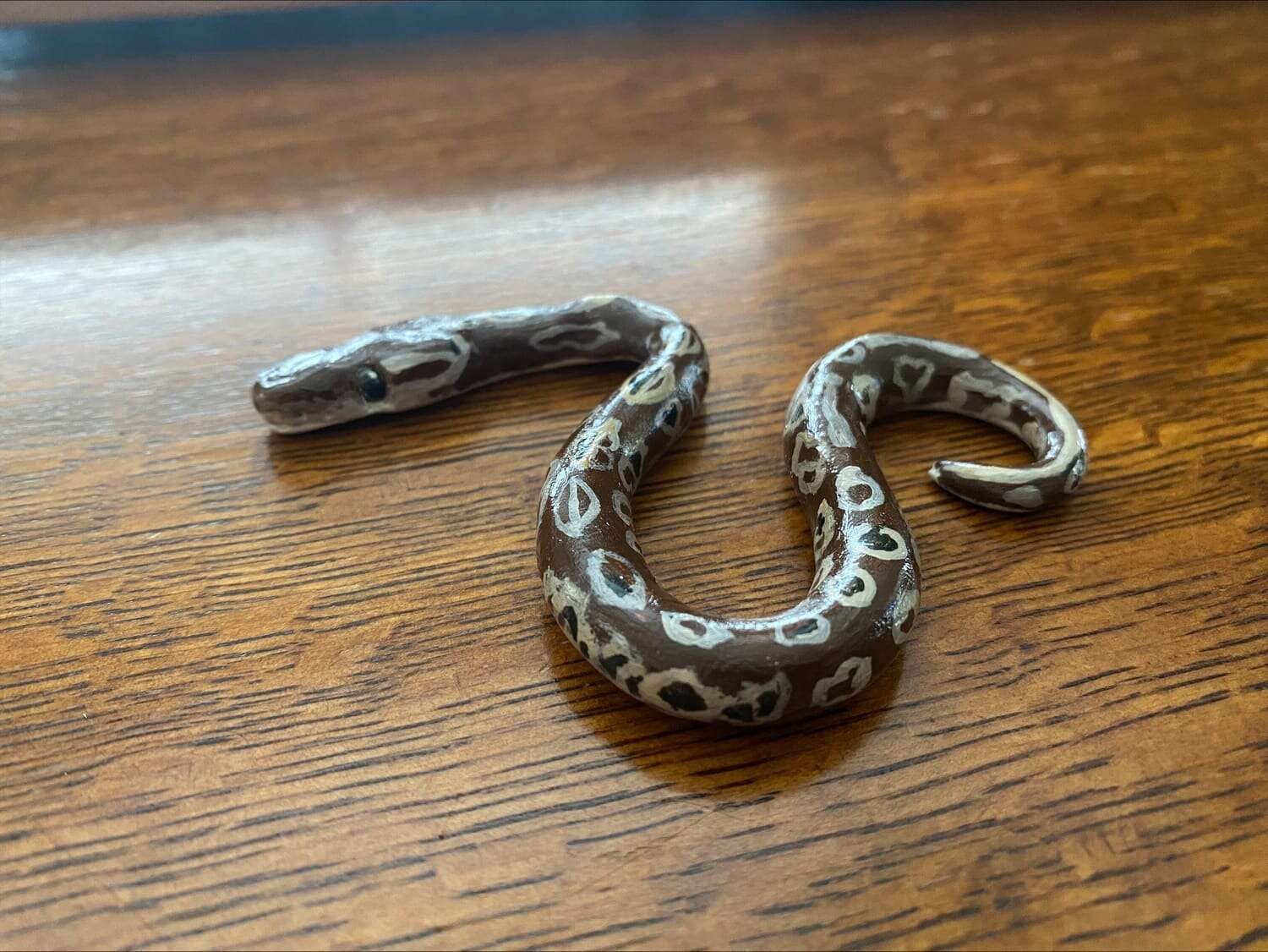
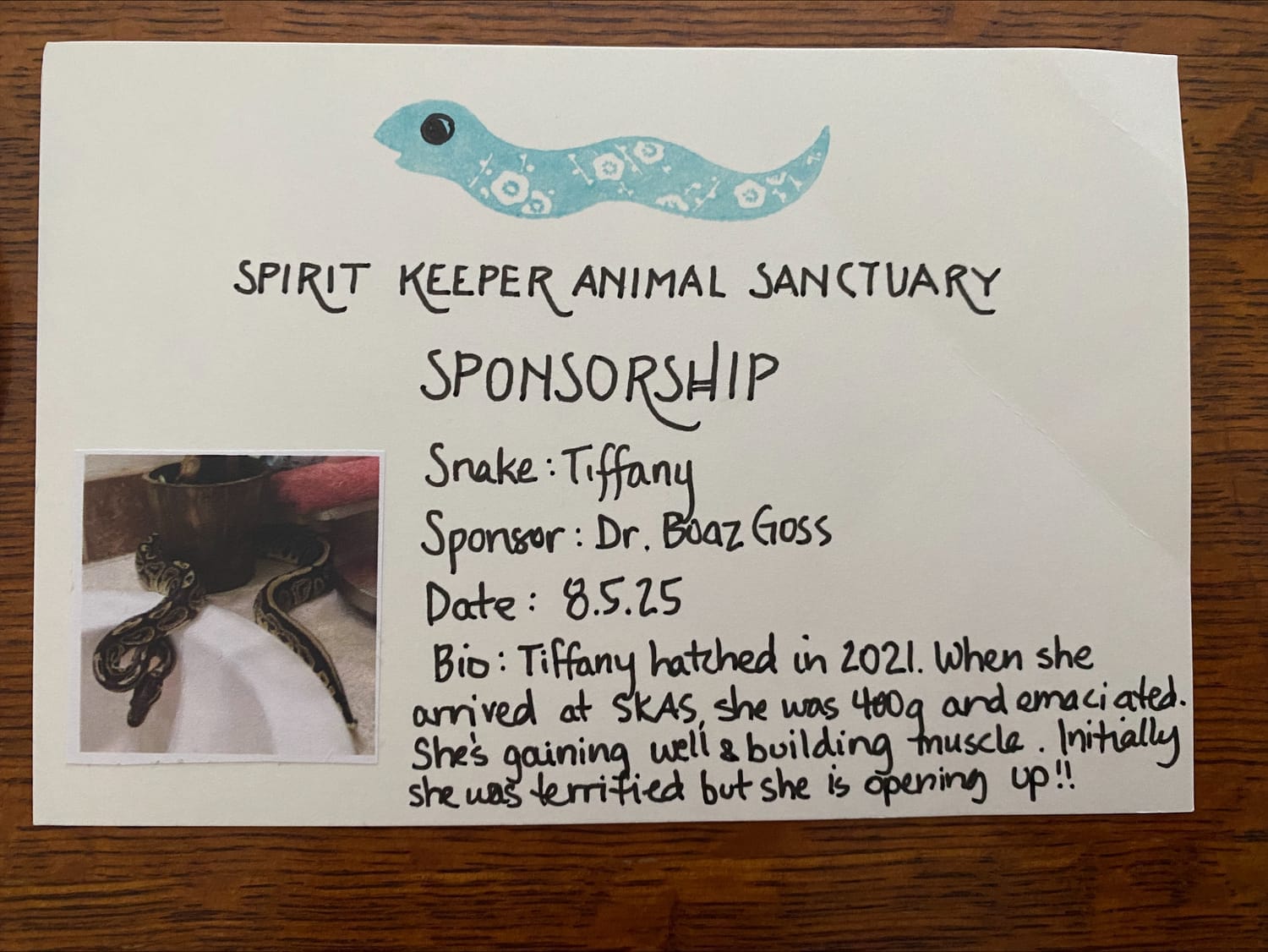
Welcome to the team, Tiffany.
☦️❤️🐍
Addendum—July 2026
Tiffany was recently featured in a short YouTube update. Look at her—she's a new snake now! It looks like she's already longer than Sweet Potato.
A name pulls a creature out of the chaos and into the light.
Your ideas deserve the same distinct identity.
Whether you are an author nursing a manuscript back to health or a business seeking a name that echoes in the marketplace, do not leave your message nameless in the dark.
Let's give it the dignity of the right words.
Comments are welcome. I read everything, but my charism is writing, not debate. So I respond selectively, only when conversation clearly serves truth and charity. If you don't receive a response, please don't take it personally. Time and energy are precious resources, and I steward them toward the essays themselves.
All comments go through moderation.
If you'd like to engage more substantively, consider writing your own response essay and contacting us through email or social media. I'd be honored to read it and potentially feature it as a guest essay.
☦️❤️🐍
~ Dr. Boaz
The Serpentine Byzantines

Joint Dr. Boaz, the Human
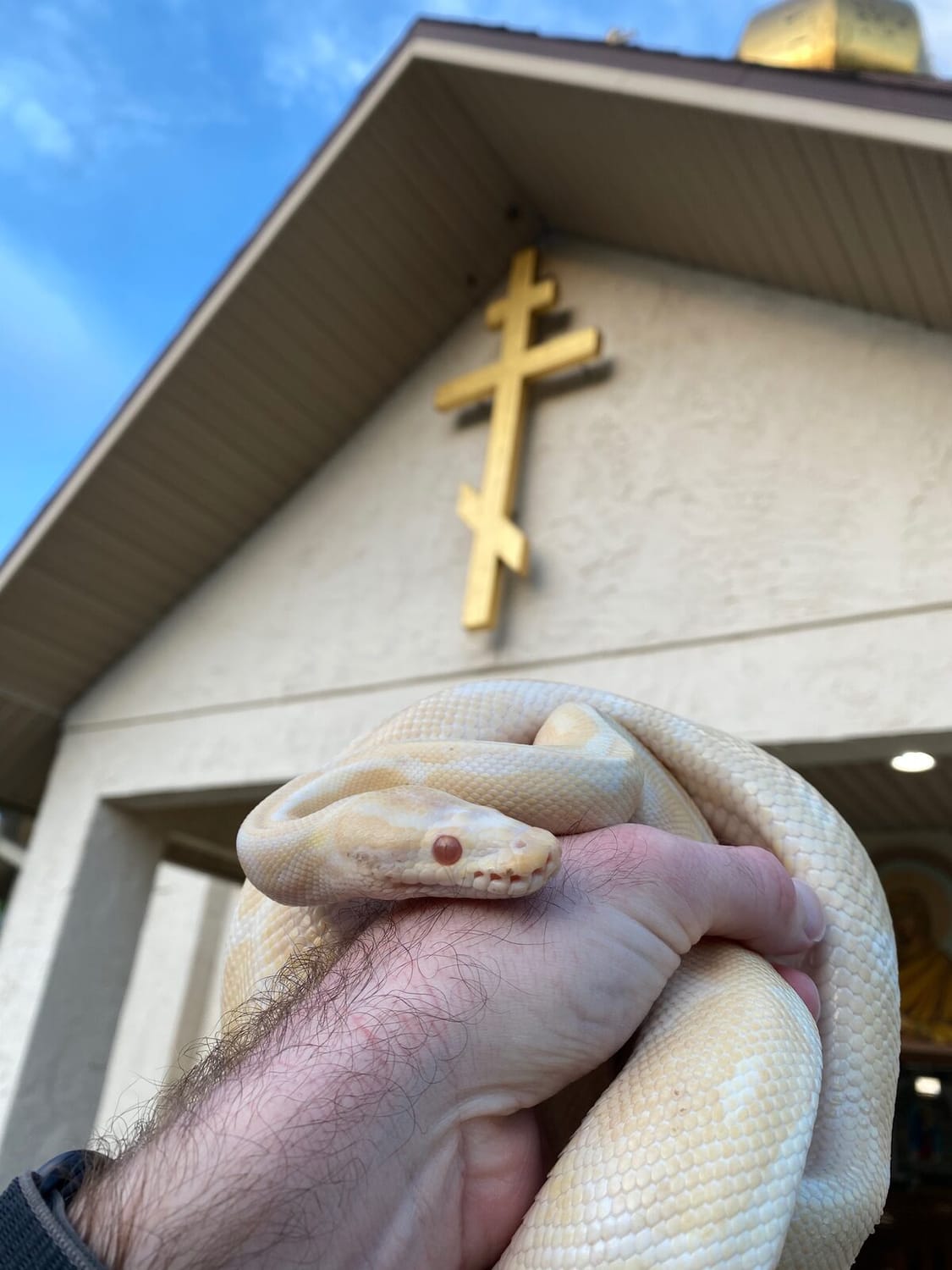
Sweet Potato, the Ball Python
We're a small team comprising a human and a snake.
Joint Dr. Boaz has a Joint PhD in Healthcare Ethics and Theology. He lives a 2nd life as a professional dancer. He's also a parish cantor, visual artist, and gaming streamer.
Sweet Potato is a male albino Ball Python. Born and raised in Florida, he's also traveled across the USA via road trips and even a flight! He's been blessed by a priest and once completed an entire Paschal Fast without eating a single meal.
Let's Connect!
All content © 2020-2026 The Orthodox Snake Writing Agency LLC