



Take the Pagan Gold
A reflection on St. Gregory of Nyssa and Moses.
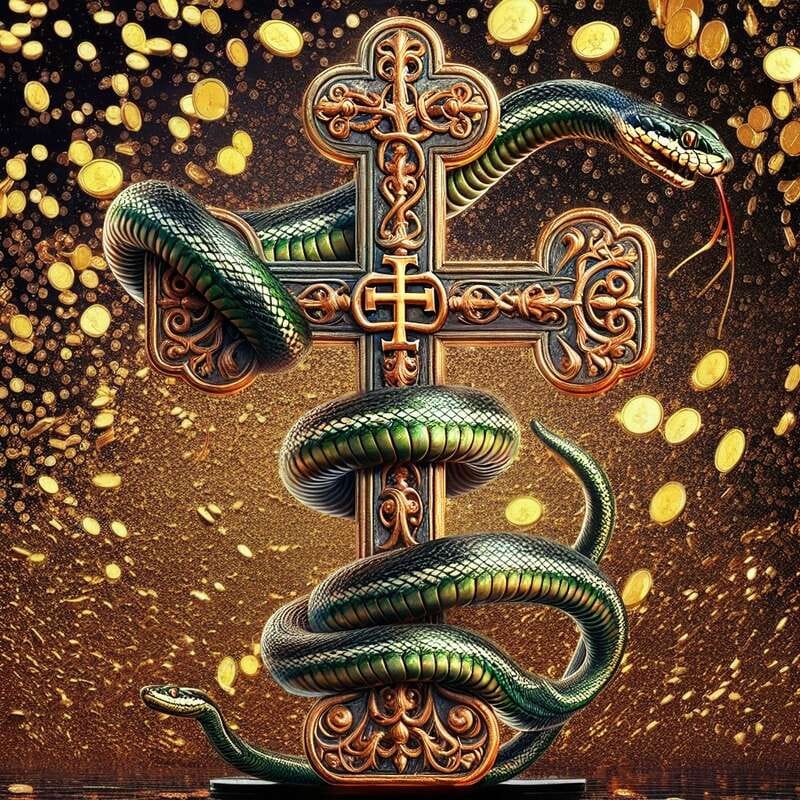
Made by me using Magai.co
The ark which carried the baby Moses safely across the Nile was constructed through education in the different disciplines, all of them secular. There are certain things derived from profane education which should not be rejected in pursuit of God. Thus, acquiring the “wisdom of the Egyptians” is necessary; indeed, acquiring it is a divine command. The Hebrews “spoiled the Egyptians”, pillaging their finest possessions (Exodus 12:35–36). The spiritual moral this story is that God commands Christians to equip themselves with the wealth of pagan learning. Subjects such as moral philosophy, the natural sciences, mathematics, astronomy, logic, debate… all will be useful when it is time to adorn the divine sanctuary with the riches of reason, as the Egyptian riches eventually built the Ark of the Covenant.
— St Gregory of Nyssa’s “Life of Moses” with John Meyendorff’s Preface
If all reality is maintained by God, then is there truly any knowledge that is truly secular, pagan, atheistic, or otherwise outside the boundaries of the Church?
Moses was given the finest Egyptian education. (Act 7:22) The Egyptians were on the cutting-edge of mathematics and engineering, so whatever Moses learned in these subjects, he assuredly learned it from pagans. Even worse, these same pagans were slave masters over the Hebrews. They were the very people who hated God’s people, even willing to murder their newborns (Exodus 1:16 + 1:22). Yet the Egyptians were the best mathematicians and engineers of their time, and Moses willfully learned what they gave him.
The Hebrews used Egyptian gold to build their holiest Ark. (Exodus 12:35–36) We can be certain the Egyptians previously used some of that gold to adorn their own altars, and the rest to adorn their vanity.
Saint Gregory was given a Greek’s education by his brother St. Basil, which consisted of logic, public speaking, literature, and ethics. All these disciplines were considered “pagan” in Gregory’s time. Today, these disciplines, along with many others, are often called “secular” or even “atheistic” subjects.
But St. Gregory used his wisdom in these “pagan” disciplines to defend the divinity of the Son and Holy Spirit at the First Council of Constantinople in 381.
If “outsider” knowledge can serve the Church, then it’s wrong to consider it out-of-bounds for Christians. And “outsider” knowledge goes by other names: pagan, secular, atheistic, and so on.
There are many voices, both in St. Gregory’s time and our own, that tell us to draw a hard boundary between the Church and the rest of the world. We live in a world of divisions and ideological tribes: secular versus religious, atheistic versus Christian, pagan vs Judeo-Christian. We’re led to pick one side, one tribe, one ideology, and never stray out-of-bounds to the other side.
Yet no truth is outside of God’s boundary. No truth was created outside of Christ, the divine Logos (John 1), so why should it be out-of-bounds for us who follow Christ? St. Gregory began his life as an orator in the pagan world, yet through those same skills he would define Christian doctrine.
☦️❤️🐍
Also made by me using Magai.co
You have the vision (the Ark), but do you have the gold? Many mission-driven leaders fear that using 'secular' tools like sales psychology, persuasive rhetoric, or strategic marketing is somehow 'selling out.' History says otherwise.
Moses didn't leave the gold in Egypt, and St. Gregory didn't leave the logic in Athens. They took the best tools of their time and sanctified them for a higher purpose.
If you are ready to stop apologizing for your ambition and start using the best tools available to build your mission, let's get to work. ⬇️
Comments are welcome. I read everything, but my charism is writing, not debate. So I respond selectively, only when conversation clearly serves truth and charity. If you don't receive a response, please don't take it personally. Time and energy are precious resources, and I steward them toward the essays themselves.
All comments go through moderation.
If you'd like to engage more substantively, consider writing your own response essay and contacting us through email or social media. I'd be honored to read it and potentially feature it as a guest essay.
☦️❤️🐍
~ Dr. Boaz
The Serpentine Byzantines

Joint Dr. Boaz, the Human
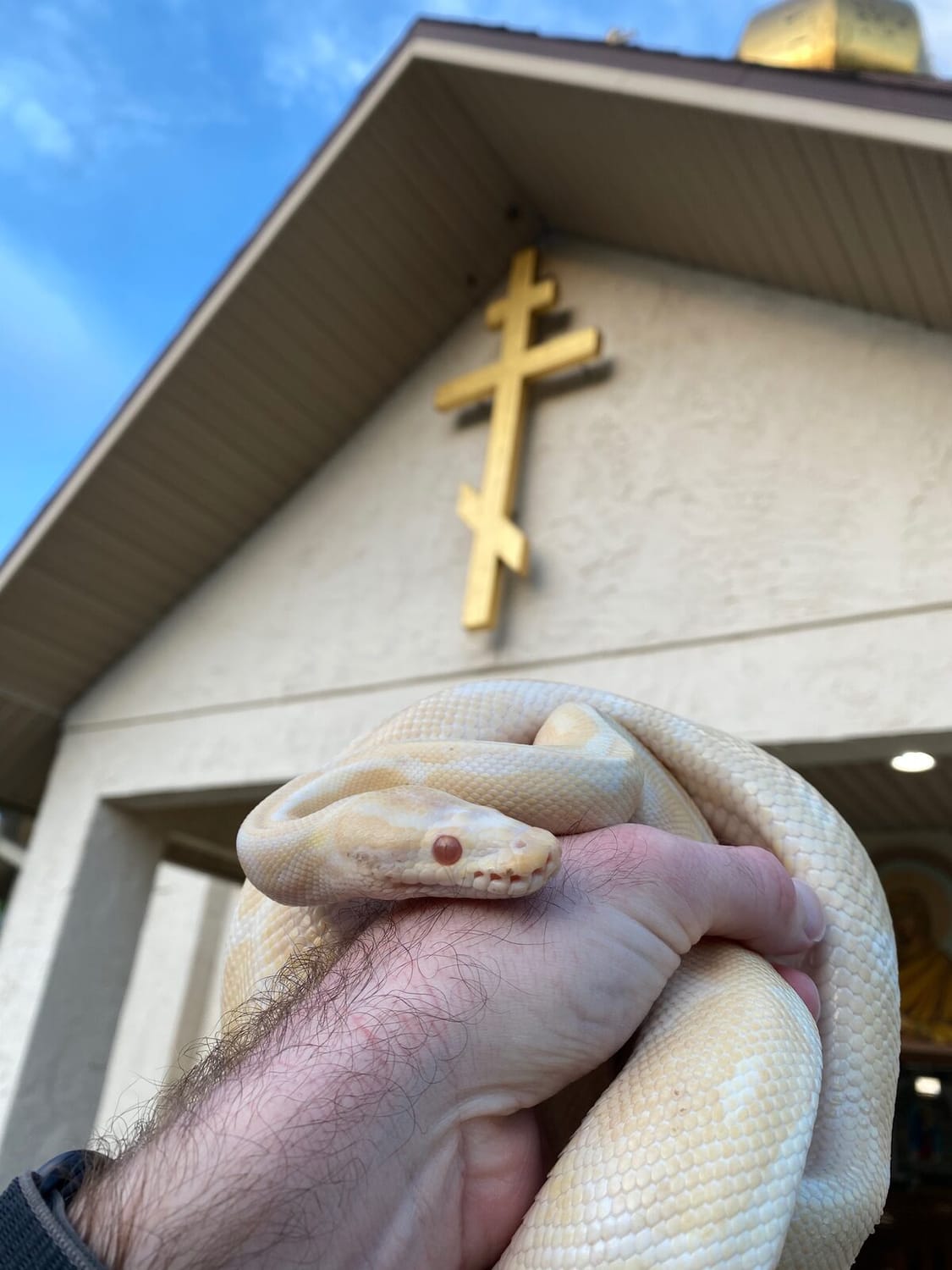
Sweet Potato, the Ball Python
We're a small team comprising a human and a snake.
Joint Dr. Boaz has a Joint PhD in Healthcare Ethics and Theology. He lives a 2nd life as a professional dancer. He's also a parish cantor, visual artist, and gaming streamer.
Sweet Potato is a male albino Ball Python. Born and raised in Florida, he's also traveled across the USA via road trips and even a flight! He's been blessed by a priest and once completed an entire Paschal Fast without eating a single meal.
Let's Connect!
All content © 2020-2026 The Orthodox Snake Writing Agency LLC